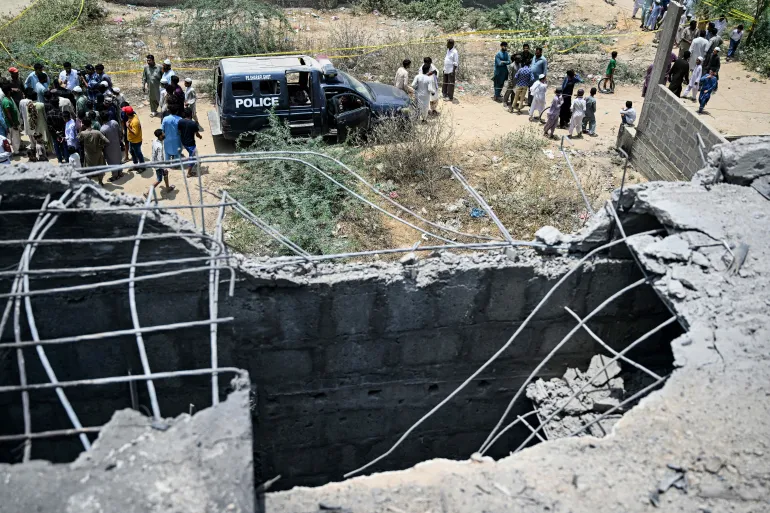
🇮🇳🇵🇰 India vs Pakistan War 2025 – Live Updates and Breaking News
More updated : www.cashflaredigital.com
🕒 Timeline of Escalation
- April 22, 2025: A terrorist attack in Pahalgam, Jammu and Kashmir, resulted in the deaths of 26 Hindu tourists. India attributed the attack to Pakistan-based groups, notably Lashkar-e-Taiba.
- May 7, 2025: India launched “Operation Sindoor,” targeting alleged terrorist infrastructures in Pakistan-administered Kashmir and Punjab. The operation involved missile strikes on nine terror targets, including the Jaish-e-Mohammad stronghold in Bahawalpur and Lashkar-e-Taiba’s base in Muridke.
- May 10, 2025: Pakistan responded with “Operation Bunyan-un-Marsoos,” launching missile strikes on Indian military installations, including BrahMos missile storage sites and airfields in Punjab and Jammu and Kashmir.
🔥 Current Developments
- Military Engagements: Both nations have engaged in missile and drone strikes. Pakistan claims to have destroyed India’s S-400 air defense system, a claim India denies.
- Casualties: Civilian casualties have been reported on both sides. Pakistan reports 33 deaths, while India confirms the death of a district official.
- Airspace and Alerts: Pakistan has closed its airspace. Red alerts have been issued in northern Indian cities.
- International Reactions: The U.S., Saudi Arabia, and G7 nations have urged both countries to exercise restraint and offered mediation to prevent further escalation. (Financial Times)
📌 Key Takeaways
- Nuclear Concerns: Both countries possess nuclear capabilities. Pakistan’s National Command Authority, responsible for nuclear oversight, has convened, signaling the gravity of the situation.
- Information Warfare: Misinformation is rampant on social media platforms. It’s crucial to rely on verified news sources for accurate information.
- Diplomatic Efforts: International actors are actively seeking to mediate and de-escalate tensions between the two nations.
🇵🇰 Operation Bunyan-un-Marsoos: Pakistan’s Military Response Explained
📖 Meaning Behind the Name
“Bunyan-un-Marsoos” is derived from the Quran, translating to “a solid wall of steel” or “a firm structure.” This phrase symbolizes unity and resilience, reflecting Pakistan’s intent to present a formidable and cohesive response to perceived aggression. (Outlook Business, ProPakistani)
🛡️ Objectives of the Operation
Launched on May 10, 2025, Operation Bunyan-un-Marsoos was Pakistan’s retaliatory measure against India’s Operation Sindoor. The primary goals were:
- Neutralize Indian Military Assets: Target key Indian military installations to diminish their operational capabilities.(The Guardian)
- Demonstrate Strategic Deterrence: Showcase Pakistan’s readiness and capability to respond to threats.
- Reinforce National Unity: Invoke religious and nationalistic sentiments to unify the populace.(Firstpost)
🎯 Targets and Impact
Pakistan’s military targeted several strategic Indian sites:(Al Jazeera)
- Pathankot Airbase: A significant air force station in Punjab.(The Guardian)
- Udhampur Airbase: Located in Jammu and Kashmir, crucial for northern defense operations.
- BrahMos Missile Storage Facilities: Key to India’s missile capabilities.(Business Standard)
These strikes led to heightened tensions, with both nations reporting casualties and infrastructural damages. (The Guardian)
🌐 International Reactions
The global community expressed deep concern over the escalating conflict:
- United States: Offered mediation but refrained from direct involvement.
- G7 Nations: Urged both countries to exercise restraint and engage in dialogue.
- China: Called for peaceful resolution and emphasized regional stability.
These reactions highlight the international community’s apprehension about potential nuclear escalation. (The Times)
🧭 Strategic Implications
Operation Bunyan-un-Marsoos underscores several critical aspects:
- Military Readiness: Pakistan’s ability to execute coordinated strikes.(Nation)
- Psychological Warfare: The operation’s name and execution aimed to bolster national morale.
- Diplomatic Challenges: The need for effective communication channels to prevent misunderstandings.(Reuters)

🇮🇳🇵🇰 India–Pakistan Conflict 2025: What Sparked the Current War?
🔥 The Catalyst: Pahalgam Terror Attack
The immediate trigger for the 2025 escalation was a terrorist attack on April 22 in Pahalgam, Jammu and Kashmir, which resulted in the deaths of 26 Hindu tourists. India accused Pakistan-based militant groups, particularly Lashkar-e-Taiba, of orchestrating the attack. Pakistan denied involvement, leading to a rapid deterioration in bilateral relations. (AP News)
⚔️ Retaliatory Strikes: Operation Sindoor
In response, India launched “Operation Sindoor” on May 7, targeting nine alleged terrorist camps in Pakistan and Pakistan-administered Kashmir. The operation aimed to dismantle militant infrastructure and eliminate key leaders. Notably, the strike in Bahawalpur targeted a Jaish-e-Mohammed stronghold, while Muridke was associated with Lashkar-e-Taiba.
🛡️ Pakistan’s Retaliation: Operation Bunyan-un-Marsoos
Pakistan responded with “Operation Bunyan-un-Marsoos,” launching missile strikes on Indian military installations, including BrahMos missile storage sites and airfields in Punjab and Jammu and Kashmir. The operation was named to signify a strong and unified response to India’s actions.
🌐 Diplomatic Fallout and Global Concerns
The escalation led to significant diplomatic repercussions:(The US Sun)
- India’s Actions: India expelled Pakistani diplomats, suspended visa services, and withdrew from the Indus Waters Treaty. (Wikipedia)
- Pakistan’s Countermeasures: Pakistan closed its airspace, imposed trade restrictions, and suspended the Shimla Agreement. (Wikipedia)
🇮🇳 Operation Sindoor: India’s Strategic Military Offensive
🎯 Objectives and Execution
Launched on May 7, 2025, Operation Sindoor was India’s targeted military response to the April 22 terrorist attack in Pahalgam, Jammu and Kashmir, which resulted in the deaths of 26 Hindu tourists. India attributed the attack to Pakistan-based militant groups, particularly Lashkar-e-Taiba. In retaliation, India aimed to dismantle terrorist infrastructure and eliminate key leaders associated with these groups.
The operation involved a 23-minute precision strike by the Indian Air Force, utilizing Rafale jets armed with SCALP missiles and AASM Hammer bombs. Nine sites were targeted across Pakistan and Pakistan-administered Kashmir, including Bahawalpur, Muridke, Sialkot, Bhimber, Kotli, and Muzaffarabad. These sites were linked to Lashkar-e-Taiba and Jaish-e-Mohammed, two prominent militant organizations. (Wikipedia)
🛡️ Military Impact
The strikes resulted in significant damage to terrorist camps, hideouts, and headquarters. Pakistan claimed to have shot down five Indian fighter jets in self-defense; however, independent analyses suggest that only two aircraft were downed, one in India and another in Indian-administered Kashmir. Debris from the wreckage was identified as an external fuel tank for a Rafale or Mirage fighter jet. (Wikipedia)
🌐 International Reactions
The global community expressed deep concern over the escalating conflict:
- United States: Offered mediation but refrained from direct involvement.
- G7 Nations: Urged both countries to exercise restraint and engage in dialogue.
- China: Called for peaceful resolution and emphasized regional stability.(ft.com)
🇮🇳🇵🇰 Pak vs India War Updates – Latest Ground and Air Battle Reports
🛡️ Ground Operations: Escalation and Retaliation
-
Indian Strikes: Following the Pahalgam attack, India launched “Operation Sindoor,” targeting nine sites in Pakistan and Pakistan-administered Kashmir, including Muridke and Bahawalpur, associated with Lashkar-e-Taiba and Jaish-e-Mohammed.
-
Pakistan’s Response: Pakistan retaliated with “Operation Bunyan-un-Marsoos,” launching missile strikes on Indian military installations, including BrahMos missile storage sites and airfields in Punjab and Jammu and Kashmir.
-
Troop Mobilization: Both nations have mobilized troops; India activated reserve forces to strengthen its western border, while Pakistan has increased deployments near the frontier.
✈️ Air Engagements: Intense Aerial Clashes
-
Massive Dogfight: On May 7, 2025, over 125 fighter jets from both India and Pakistan engaged in what has been described as one of the largest and longest aerial battles in modern history.
-
Aircraft Losses: India reported the loss of three Rafale jets, one MiG-29, and one Su-30MKI, while Pakistan claimed to have downed five Indian aircraft.
-
Drone Warfare: Pakistan reported shooting down 77 Indian drones, including Israeli-made Harop drones, targeting civilian and military installations.
🌐 International Reactions and Diplomatic Efforts
-
Global Concerns: The United States, China, and G7 nations have expressed deep concern over the escalating conflict and have urged both countries to exercise restraint and engage in dialogue.
-
Mediation Offers: The U.S., Saudi Arabia, and Turkey have offered mediation to de-escalate tensions, while the G7 has called for direct dialogue between India and Pakistan.
-
Civilian Impact: Civilian casualties have been reported on both sides, particularly in the disputed Kashmir region, with at least 48 deaths since the escalation began.
🗓️ Timeline: Pakistan Attacks India – Path to War
April 22, 2025 – Pahalgam Terrorist Attack
Gunmen killed 26 civilians, including 25 Hindu tourists and one Nepali national, in Pahalgam, Jammu and Kashmir. India attributed the attack to the Islamic Resistance Front, an offshoot of the Pakistan-based Lashkar-e-Taiba. Pakistan denied involvement. The attack led to the suspension of the Indus Waters Treaty by India and the closure of the Attari–Wagah border.
April 23–30, 2025 – Diplomatic and Military Tensions Rise
Both nations expelled each other’s diplomats, suspended key treaties, and closed borders. India accused Pakistan of sponsoring cross-border terrorism, while Pakistan denied the allegations. The situation marked the most serious confrontation since the 1999 Kargil War.
May 6, 2025 – India Launches Operation Sindoor
India conducted missile strikes on nine sites in Pakistan and Pakistan-administered Kashmir, targeting what it described as “terrorist infrastructure.” The strikes resulted in 31 deaths. Pakistan denied the existence of such infrastructure and condemned the attacks as unprovoked.
May 7, 2025 – Pakistan’s Retaliation: Operation Bunyan Ul Marsoos
Pakistan launched retaliatory missile strikes on Indian military bases, including Pathankot airfield and BrahMos missile storage in Punjab. Explosions were reported in Srinagar and other areas, prompting red alerts and blackouts across Indian-administered Kashmir and nearby states.
May 8, 2025 – Drone Warfare Intensifies
Pakistan reported shooting down 77 Indian drones, including Israeli-made Harop drones, targeting civilian and military installations. India reported multiple drone incursions into its airspace, leading to increased military readiness.
May 9, 2025 – Massive Aerial Dogfight
Over 100 fighter jets from both India and Pakistan engaged in a massive aerial battle, marking one of the largest dogfights since World War II. Pakistan claimed to have shot down five Indian jets using Chinese PL-15 missiles, while India did not confirm any losses.
May 10, 2025 – Ongoing Hostilities
Both nations remain on high alert, with continued missile exchanges and military mobilizations. The international community has expressed grave concern over the potential for nuclear escalation. Diplomatic efforts by the U.S. and other nations to mediate have so far been unsuccessful.
Key Takeaways:
- Nuclear Risks: Both India and Pakistan possess nuclear weapons, raising concerns over the potential for a catastrophic escalation.
- International Concern: Global powers have urged both nations to exercise restraint and engage in dialogue to prevent further escalation.
- Humanitarian Impact: The conflict has resulted in civilian casualties on both sides and disrupted daily life, particularly in the Kashmir region.
-
🌐 International Media on Pak-India War – Global Coverage
📰 Global Media Reactions
-
The Guardian (UK) reports that Pakistan has claimed to have struck Indian military bases in a major escalation, with troop buildups reported at the border. Both countries have mobilized forces, and civilian casualties have already reached at least 48 since Wednesday. The Guardian
-
The Times (UK) highlights that tensions have escalated significantly, with both countries engaging in missile and drone strikes across their borders. The conflict intensified following a deadly terror attack on Hindu tourists in Kashmir, for which India blamed Pakistan. In retaliation, India targeted what it described as terrorist infrastructure in Pakistan, prompting Islamabad to launch Operation “Bunyan-un-Marsoos,” striking Indian military targets. Both sides have reported civilian casualties and damage to airbases and military infrastructure. Several key airports and schools have been closed, and major sporting events such as the Indian Premier League have been suspended. The Times
-
El País (Spain) warns of a dangerous escalation between India and Pakistan, potentially leading to their fifth war since the 1947 partition. The conflict originated from a terrorist attack on April 22 in Pahalgam, Kashmir, which left 26 tourists dead. New Delhi blamed a group allegedly backed by Islamabad, leading to a series of retaliatory actions, including visa restrictions, diplomatic expulsions, suspension of a crucial water agreement, and ultimately, Indian airstrikes in Pakistani territory that resulted in 31 deaths. Both countries possess nuclear weapons under a “no first use” doctrine, but the growing distrust and tense international context make stability uncertain. El País
-
Bild (Germany) reports that the decades-long Kashmir conflict between India and Pakistan has dangerously escalated. India has reportedly attacked three Pakistani Air Force bases—Nur Khan, Murid, and Shorkot—with missiles. The attack on Nur Khan, near Rawalpindi and Islamabad, is particularly significant. Pakistan’s military spokesperson described the strikes as “blatant aggression” and vowed retaliation. Both nuclear-armed nations have exchanged bombings and drone attacks over the disputed Kashmir regions, resulting in at least 50 deaths since Wednesday. The international community, including the USA, Germany, and the EU Commission, has expressed concern and called for de-escalation. Aktuelle Nachrichten | BILD.de
-
Al Jazeera provides extensive coverage of the escalating tensions, including live updates, analysis of military strategies, and the international community’s calls for restraint.
-
France 24 reports that the European Union has called on India and Pakistan to take “immediate steps” to de-escalate after India fired missiles into Pakistani-administered territory. The EU condemned the attacks targeting civilians and civilian infrastructure and urged both nations to resume dialogue to prevent further escalation. France 24
-
The Atlantic Council analyzes India’s “Operation Sindoor” as a limited counterterrorism operation targeting nine terrorist camps in Pakistan and Pakistan-administered Kashmir. The strikes were a direct response to the April 22 Pahalgam attack in Indian-administered Kashmir, where militants from the Resistance Front, allegedly linked to Pakistan-based groups, were blamed. The article discusses the potential for further escalation and the challenges of managing tensions between nuclear-armed neighbors. Atlantic Council
-
Channel News Asia provides an explainer on the escalating India-Pakistan tensions, discussing the implications of the conflict for the region and the international community. The article highlights the concerns of global leaders and the potential for broader instability. CNA
Key Takeaways:
-
International Concern: Global powers, including the U.S., China, and G7 nations, have expressed deep concern over the escalating conflict and have urged both countries to exercise restraint and engage in dialogue. The Times
-
Nuclear Risks: Both India and Pakistan possess nuclear weapons, raising fears of a potential nuclear escalation. El País
-
Humanitarian Impact: The conflict has resulted in civilian casualties on both sides and disrupted daily life, particularly in the Kashmir region.
-
Media Narratives: International media outlets have framed the conflict in various ways, with some focusing on the humanitarian impact, others on the geopolitical implications, and some analyzing the military strategies employed by both nations.
-
As of May 10, 2025, the Group of Seven (G7) nations have expressed grave concern over the escalating conflict between India and Pakistan. The G7 has called for immediate de-escalation and maximum restraint, urging both countries to prioritize peace and stability. The United States has been actively engaged in diplomatic efforts, holding regular talks with both India and Pakistan to encourage dialogue and prevent further escalation. Jamaica Observer+1Gulf News+1Kathmandu Post
The G7’s call for restraint comes amid a series of military actions between the two nuclear-armed neighbors, including missile strikes and air raids. Both countries have reported casualties, and there are concerns about the potential for a broader regional conflict. The international community, including the G7, has emphasized the importance of diplomatic channels and dialogue to resolve the crisis peacefully. Deccan Herald+1AP News+1The Guardian
In addition to the G7’s efforts, other global powers have also expressed concern and called for restraint. China has urged both India and Pakistan to prioritize peace and stability, remain calm and restrained, and avoid taking actions that further complicate the situation. The United Nations Security Council has held closed-door consultations to discuss the situation and explore ways to prevent further escalation.
🇮🇳🇵🇰 Military Escalations
-
Operation Sindoor: In retaliation for the April 22 Pahalgam terror attack that killed 26 Indian tourists, India launched “Operation Sindoor” on May 7. Indian forces conducted missile strikes on nine sites in Pakistan and Pakistan-administered Kashmir, targeting terror camps and infrastructure associated with groups like Lashkar-e-Taiba and Jaish-e-Mohammed. Pakistan claims to have shot down five Indian jets during the operation, though these claims are disputed .Wikipedia+1The Times of India+1
-
Pakistan’s Retaliation: Following India’s strikes, Pakistan initiated “Operation Bunyan Ul Marsoos,” targeting multiple Indian military sites, including Pathankot and Udhampur airbases. These strikes have resulted in civilian casualties and significant damage to infrastructure .The Guardian
-
Drone Warfare: Both nations have employed drone technology in their military strategies. Pakistan launched a swarm of over 50 drones targeting Indian military and civilian establishments, including Jammu, Pathankot, and Udhampur. India’s air defense systems successfully intercepted the majority of these drones .InstagramRepublic World
🌐 International Reactions
-
G7 Nations: The G7 has expressed deep concern over the escalating conflict, urging both India and Pakistan to exercise restraint and engage in dialogue to prevent further escalation .
-
United States: The U.S. has called for de-escalation and offered to mediate between the two nations. However, U.S. Vice President JD Vance stated that the conflict is “fundamentally none of our business,” emphasizing the need for both countries to resolve the issue independently .The Economic Times
-
China: China has urged both India and Pakistan to prioritize peace and stability, remain calm and restrained, and avoid taking actions that further complicate the situation .
📰 Media Coverage
-
Al Jazeera: Provides live updates on the conflict, including reports of airstrikes and explosions in both countries .Al Jazeera+3Al Jazeera+3Al Jazeera+3
-
The Guardian: Offers detailed coverage of the military actions, including the strikes on airbases and the subsequent retaliatory actions by both nations .The Guardian
-
Reuters: Reports on the escalation of tensions, including the closure of airspace and the suspension of sporting events like the Indian Premier League
🇮🇳 India vs 🇵🇰 Pakistan: Military Strength Comparison (2025)
🔹 Global Firepower Index Ranking
-
India: Ranked 4th globally
-
Pakistan: Ranked 12thThe Guardian+16Read.pk+16Defence Security Asia+16Wikipedia, l’enciclopedia libera+6Business Standard+6Read.pk+6
India’s higher ranking reflects its larger and more technologically advanced military. However, Pakistan’s strategic positioning and alliances continue to enhance its defense capabilities. Power Corridors
🔹 Active Military Personnel
-
India: Approximately 1.46 million active personnel
-
Pakistan: Approximately 654,000 active personnelGlobal Firepower+23Business Standard+23Firstpost+23
India’s larger manpower provides a significant advantage in terms of ground operations and sustained military campaigns.
🔹 Defense Budget
-
India: Approximately $81 billion
-
Pakistan: Approximately $10 billionjbms.pk+2Firstpost+2Read.pk+2
India’s substantially higher defense budget enables greater investment in modernizing its military forces and acquiring advanced technologies.
🔹 Air Power
-
India: Approximately 2,229 total aircraft, including 513 fighter jets
-
Pakistan: Approximately 1,399 total aircraft, including 328 fighter jetsFirstpost+2bhelherp.com+2DNA India+2
India’s superior air fleet provides enhanced capabilities for both defensive and offensive operations.
🔹 Ground Forces
-
India: Approximately 4,201 tanks
-
Pakistan: Approximately 2,627 tanksFirstpost+1ElHuffPost+1Business Standard+4ElHuffPost+4The Guardian+4
India’s larger tank fleet offers a significant advantage in armored warfare.
🔹 Naval Assets
-
India: Approximately 293 naval assets, including two aircraft carriers
-
Pakistan: Approximately 121 naval assetsFirstpost
India’s more extensive naval capabilities enhance its power projection and maritime security.
🔹 Nuclear Arsenal
-
India: Approximately 180 nuclear warheads
-
Pakistan: Approximately 170 nuclear warheadsSputnik India+1ElHuffPost+1
Both nations possess substantial nuclear arsenals, serving as deterrents and influencing strategic calculations.
⚠️ Strategic Considerations
While India holds a conventional military advantage, Pakistan’s strategic depth, reliance on asymmetric warfare, and nuclear deterrent complicate any potential conflict scenarios. The presence of advanced Chinese military technology, such as the J-10C fighter jets supplied to Pakistan, further influences the regional balance. Defence Security AsiaAP News
Both nations continue to modernize their forces, and the evolving military dynamics require careful monitoring to assess the implications for regional stability and security.
🇮🇳🇵🇰 Military Escalations
-
Operation Sindoor: In response to the April 22 Pahalgam terror attack, India launched “Operation Sindoor” on May 7, targeting nine sites in Pakistan and Pakistan-administered Kashmir. These strikes aimed at terrorist infrastructure have resulted in civilian casualties. Pakistan claims to have downed five Indian jets during these operations, though these claims are disputed.
-
Pakistan’s Retaliation: Following India’s strikes, Pakistan initiated “Operation Bunyan Marsoos,” targeting multiple Indian military sites, including airbases in Jammu and Kashmir. These retaliatory strikes have led to civilian casualties and significant damage to infrastructure. The Guardian
-
Drone Warfare: Both nations have employed drone technology in their military strategies. Pakistan launched a swarm of over 50 drones targeting Indian military and civilian establishments. India’s air defense systems successfully intercepted the majority of these drones. NDTV Profit
🌐 International Reactions
-
G7 Nations: The G7 has expressed deep concern over the escalating conflict, urging both India and Pakistan to exercise restraint and engage in dialogue to prevent further escalation.
-
United States: The U.S. has called for de-escalation and offered to mediate between the two nations. However, U.S. Vice President JD Vance stated that the conflict is “fundamentally none of our business,” emphasizing the need for both countries to resolve the issue independently.
-
China: China has urged both India and Pakistan to prioritize peace and stability, remain calm and restrained, and avoid taking actions that further complicate the situation. Al Jazeera
📰 Media Coverage
-
Al Jazeera: Provides live updates on the conflict, including reports of airstrikes and explosions in both countries.
-
The Guardian: Offers detailed coverage of the military actions, including the strikes on airbases and the subsequent retaliatory actions by both nations.
-
Reuters: Reports on the escalation of tensions, including the closure of airspace and the suspension of sporting events like the Indian Premier League.
📺 Visual Coverage
For a visual overview of the ongoing conflict, you can watch the following live updates:
India Pakistan War – Headlines Geo News 6 AM (7th May 2025)
This video provides insights into the latest developments and media reactions to the India-Pakistan conflict.
The situation remains fluid, with both nations on high alert and international calls for de-escalation intensifying. The international community continues to monitor the situation closely, urging all parties to exercise restraint and work towards a peaceful resolution.
🇮🇳🇵🇰 Military Operations and Retaliations
-
Operation Sindoor: On May 7, India launched “Operation Sindoor,” targeting nine sites in Pakistan and Pakistan-administered Kashmir, including locations in Bahawalpur, Muridke, Sialkot, Bhimber, Kotli, and Muzaffarabad. The strikes aimed at terrorist infrastructure have resulted in civilian casualties. Pakistan claims to have downed five Indian jets during these operations, though these claims are disputed. Wikipedia+1Al Jazeera+1
-
Pakistan’s Retaliatory Strikes: In response, Pakistan initiated “Operation Bunyan Marsoos,” targeting multiple Indian military sites, including airbases in Jammu and Kashmir. These retaliatory strikes have led to civilian casualties and significant damage to infrastructure.
-
Drone Warfare: Both nations have employed drone technology in their military strategies. Pakistan launched a swarm of over 50 drones targeting Indian military and civilian establishments. India’s air defense systems successfully intercepted the majority of these drones.
🌐 International Reactions
-
G7 Nations: The G7 has expressed deep concern over the escalating conflict, urging both India and Pakistan to exercise restraint and engage in dialogue to prevent further escalation.
-
United States: The U.S. has called for de-escalation and offered to mediate between the two nations. However, U.S. Vice President JD Vance stated that the conflict is “fundamentally none of our business,” emphasizing the need for both countries to resolve the issue independently.
-
China: China has urged both India and Pakistan to prioritize peace and stability, remain calm and restrained, and avoid taking actions that further complicate the situation.
📰 Media Coverage
-
Al Jazeera: Provides live updates on the conflict, including reports of airstrikes and explosions in both countries.
-
The Guardian: Offers detailed coverage of the military actions, including the strikes on airbases and the subsequent retaliatory actions by both nations.
-
Reuters: Reports on the escalation of tensions, including the closure of airspace and the suspension of sporting events like the Indian Premier League.
📺 Visual Coverage
For a visual overview of the ongoing conflict, you can watch the following live updates:
India Pakistan War – Headlines Geo News 6 AM (7th May 2025)
This video provides insights into the latest developments and media reactions to the India-Pakistan conflict.
Hot Topic
-
India vs Pakistan War 2025 – Live Updates and Breaking News
-
Operation Bunyan Marsoos: Pakistan’s Military Move Explained
-
India Pakistan Conflict 2025: What Sparked the Current War?
-
Pak vs India War Updates – Latest Ground and Air Battle Reports
-
Pakistan Attacks India: Timeline of Events Leading to War
-
International Media on Pak India War – Global Coverage
-
G7 Countries React to India-Pakistan War 2025
-
India Pakistan War Today: Live News, Maps & Videos
-
Pakistan vs India: Military Strength Comparison in 2025
-
India Pak War News Live – Real-Time Conflict Tracking
-
Latest News on India Pakistan War Live – Verified Reports
-
India Pakistan War 2025 – Impact on Civilians and Borders
-
Pak India War Today: Strategic Cities Under Threat
-
India Pak War Latest – What Are the Next Military Steps?
-
Operation Bunyan Marsoos – What International Analysts Say
-
Pak vs India War Updates – Truth Behind Viral Videos
-
India vs Pakistan – Social Media’s Role in Fueling Tensions
-
Pakistan and India War History – Lessons from the Past
-
India Pakistan War 2025 – Possibility of Nuclear Escalation?
-
UN, NATO, and Global Powers Call for Ceasefire in South Asia