
Introduction
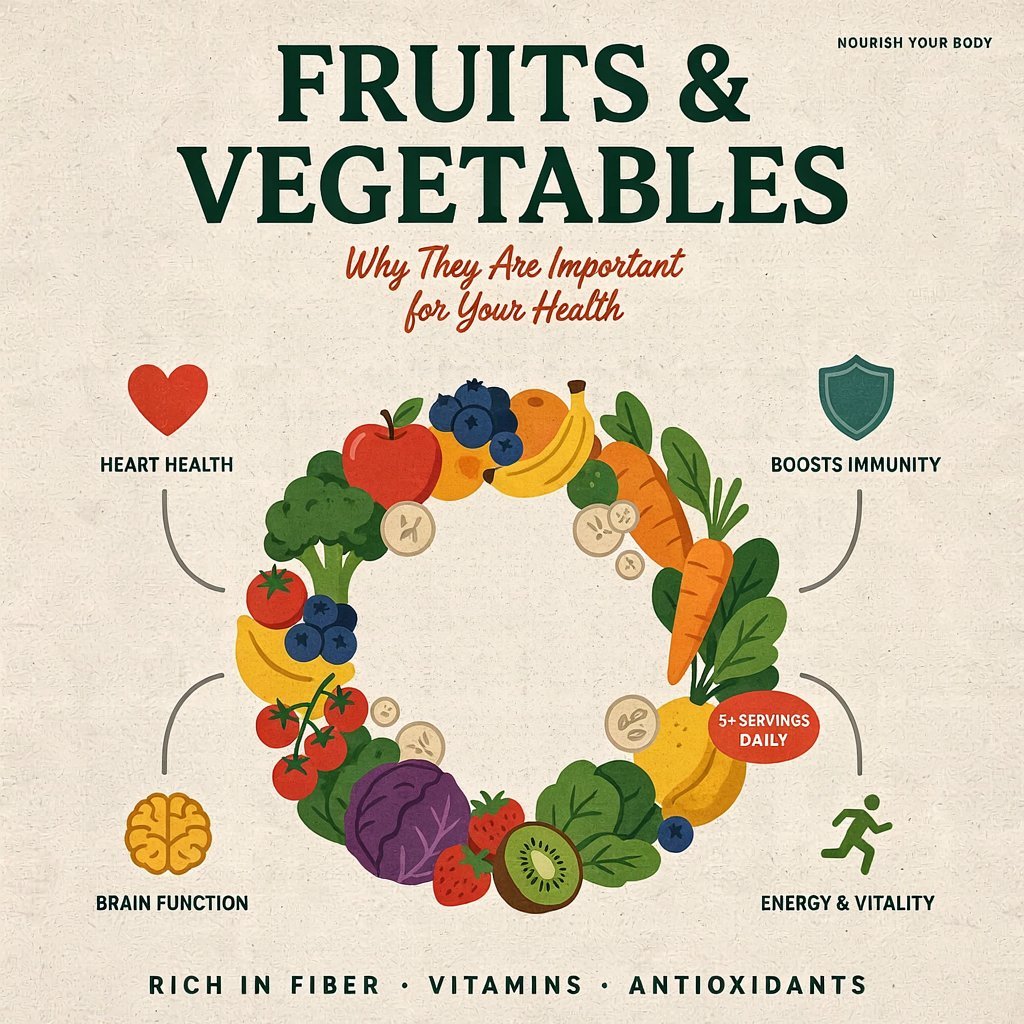
Fruits and vegetables are some of the most important foods you can include in a healthy and balanced diet. They provide a wide range of vitamins, minerals, fiber, antioxidants, and other naturally occurring nutrients that help support normal body functions.
Eating different types of fruits and vegetables can also make meals more enjoyable because they come in many different flavors, textures, and colors. From apples and bananas to spinach, carrots, tomatoes, and broccoli, there are countless options to choose from.
You do not need to follow a complicated diet to eat more fruits and vegetables. Small changes, such as adding fruit to breakfast or including vegetables with lunch and dinner, can make a meaningful difference to the overall quality of your diet.
1. Fruits and Vegetables Provide Important Nutrients
One of the biggest benefits of fruits and vegetables is their nutritional value.
Different fruits and vegetables provide different nutrients. For example:
- Oranges and other citrus fruits provide vitamin C.
- Carrots contain beta-carotene, which the body can convert into vitamin A.
- Leafy green vegetables provide nutrients such as folate and vitamin K.
- Bananas provide potassium and carbohydrates.
- Tomatoes provide vitamin C and other plant compounds.
- Sweet potatoes provide carbohydrates, fiber, and beta-carotene.
Eating a variety of foods is therefore more useful than relying on only one type of fruit or vegetable.
2. They Are a Good Source of Dietary Fiber
Many fruits and vegetables contain dietary fiber, which is an important part of a healthy diet.
Fiber can help support normal digestion and contribute to regular bowel movements. It can also help you feel full after eating.
Good fruit and vegetable sources of fiber include:
- Apples
- Pears
- Raspberries
- Guava
- Green peas
- Broccoli
- Carrots
- Sweet potatoes
- Leafy greens
When possible, eating whole fruits instead of drinking fruit juice is a simple way to include more fiber in your diet.
3. They Support a Healthy Digestive System
The fiber found in many fruits and vegetables can help support a healthy digestive system.
Some types of dietary fiber also serve as food for beneficial bacteria in the gut. A diet containing a variety of plant foods can therefore contribute to a diverse and healthy eating pattern.
If you are not used to eating much fiber, increase your intake gradually and drink enough fluids throughout the day. This can make the transition more comfortable for your digestive system.
4. They Can Help You Stay Hydrated
Some fruits and vegetables contain a large amount of water.
Foods such as:
- Watermelon
- Oranges
- Strawberries
- Cucumber
- Tomatoes
- Lettuce
- Cantaloupe
can contribute to your overall fluid intake.
However, fruits and vegetables should not replace drinking water. They are simply another way to add fluids to your diet while also providing nutrients.
5. Different Colors Offer Different Plant Compounds
One easy way to increase variety is to eat fruits and vegetables of different colors.
For example:
Red: Tomatoes, strawberries, watermelon
Orange: Carrots, oranges, pumpkin
Yellow: Bananas, yellow peppers, corn
Green: Spinach, broccoli, peas, kiwi
Blue and purple: Blueberries, blackberries, purple cabbage, eggplant
The colors of many plant foods come from naturally occurring compounds. Eating a variety of colors can help you consume a broader range of nutrients and plant compounds.
6. They Can Make Meals More Filling
Fruits and vegetables can add volume and fiber to meals without requiring large amounts of highly processed ingredients.
For example, instead of having a meal consisting mainly of refined grains, you can add:
- A side salad
- Cooked vegetables
- Fresh fruit
- Beans or lentils
- Vegetable soup
This can make meals more satisfying while increasing the variety of foods you eat.
7. They Can Be Part of a Heart-Healthy Eating Pattern
A diet rich in fruits, vegetables, whole grains, legumes, nuts, and other nutritious foods can be part of an overall heart-healthy eating pattern.
Fruits and vegetables provide nutrients and fiber while generally being low in saturated fat. Replacing some highly processed foods with whole or minimally processed plant foods can improve the overall nutritional quality of a diet.
The goal is not to depend on one particular food. A healthy eating pattern is built from many nutritious foods eaten regularly.
8. Fresh, Frozen, and Canned Options Can All Be Useful
You do not always need to buy fresh produce.
Fresh, frozen, and canned fruits and vegetables can all be convenient choices. Frozen vegetables can be particularly useful when certain fresh vegetables are unavailable or when you need something quick to prepare.
When buying canned products, check the nutrition label when possible. Choosing vegetables with less added sodium and fruits packed in water or their own juice can be a practical option.
9. Fruits and Vegetables Can Make Healthy Eating Easier
Healthy eating does not have to be boring or complicated.
You can use fruits and vegetables in many simple meals:
Breakfast
- Banana with oatmeal
- Berries with yogurt
- Vegetable omelet
- Apple with whole-grain toast
Lunch
- Chicken and vegetable salad
- Lentil soup with vegetables
- Vegetable sandwich
- Rice with mixed vegetables
Dinner
- Grilled vegetables with fish or chicken
- Vegetable curry with whole grains
- Stir-fried vegetables with beans
- Baked potatoes with vegetables
Snacks
- Apple
- Orange
- Carrot sticks
- Cucumber slices
- Fresh berries
10. Simple Ways to Eat More Fruits and Vegetables
Increasing your intake does not have to happen all at once. Try a few simple habits:
- Add a piece of fruit to breakfast.
- Keep washed fruit where you can easily see it.
- Add vegetables to sandwiches and wraps.
- Include a vegetable with lunch and dinner.
- Add berries or sliced banana to yogurt or oatmeal.
- Keep frozen vegetables available for quick meals.
- Add vegetables to soups, curries, and rice dishes.
- Try one new fruit or vegetable each week.
- Choose whole fruit instead of fruit juice more often.
- Aim for variety rather than eating the same foods every day.
How to Build a More Colorful Plate
A simple approach is to look at your plate before eating and ask whether you can add another type of plant food.
For example, a balanced meal might include:
- A protein source such as beans, lentils, eggs, fish, chicken, or yogurt
- A whole-grain or other carbohydrate source
- One or two types of vegetables
- A piece of fruit if desired
You do not have to make every meal perfect. What matters more is the overall pattern of your diet over time.
Are Whole Fruits Better Than Fruit Juice?
Whole fruit is generally a better everyday choice than fruit juice because whole fruit contains fiber and usually takes longer to consume.
Juice can still be part of a diet, but it is easier to consume a large amount of fruit sugar quickly when drinking juice. For everyday eating, choosing whole fruits more often is a simple approach.
Tips for Preparing Fruits and Vegetables
Proper preparation can make fruits and vegetables easier to include in your routine.
- Wash fresh produce before eating or preparing it.
- Store foods appropriately to maintain quality.
- Avoid overcooking vegetables when possible.
- Use steaming, roasting, baking, or light sautéing for variety.
- Add herbs and spices instead of relying heavily on salt.
- Keep convenient options such as frozen vegetables available.
The best preparation method is often the one that helps you eat these foods regularly.
Frequently Asked Questions
1. Why are fruits and vegetables important?
Fruits and vegetables provide vitamins, minerals, fiber, water, and a variety of naturally occurring plant compounds. Including a variety of them can help improve the nutritional quality of your overall diet.
2. Is it okay to eat fruit every day?
Yes. Whole fruits can be a nutritious part of a balanced diet and provide nutrients and dietary fiber.
3. Are frozen vegetables healthy?
Yes. Frozen vegetables can be a convenient and nutritious option, especially when fresh produce is not readily available.
4. Should I eat vegetables at every meal?
Including vegetables regularly throughout the day is a useful habit, but your diet does not have to be perfect at every meal. Focus on your overall eating pattern.
5. Is fruit juice as healthy as whole fruit?
Whole fruit is generally a better everyday choice because it contains fiber and is usually more filling than juice.
6. Which fruits and vegetables are the healthiest?
There is no single fruit or vegetable that is best for everyone. Eating a wide variety of fruits and vegetables gives you access to different nutrients and plant compounds.
7. Can children eat fruits and vegetables every day?
Yes. Fruits and vegetables can be part of a balanced diet for children. The appropriate foods and portions depend on the child’s age and individual needs.
8. How can I eat more vegetables if I do not like them?
Start with vegetables you enjoy and add small amounts to familiar meals. You can also try different cooking methods, such as roasting, steaming, or adding vegetables to soups and curries.
Conclusion
Fruits and vegetables are an important part of a nutritious and balanced diet. They provide a wide variety of vitamins, minerals, fiber, water, and naturally occurring plant compounds that support normal body functions.
The key is variety. Instead of focusing on one “superfood,” try to include different fruits and vegetables throughout the week. Choose different colors, experiment with new foods, and use fresh, frozen, or suitable canned options according to your budget and convenience.
Healthy eating does not require perfection. Simple, consistent choices—such as adding fruit to breakfast, including vegetables with meals, and choosing whole fruits more often—can help you build a healthier eating pattern over time.
Disclaimer
This article is provided for general informational and educational purposes only. It is not intended to provide medical advice, diagnosis, or treatment. Individual nutritional needs can vary based on age, health status, medications, allergies, and other factors. If you have a specific health condition or dietary concern, consult a qualified healthcare professional or registered dietitian for personalized advice.