
Introduction
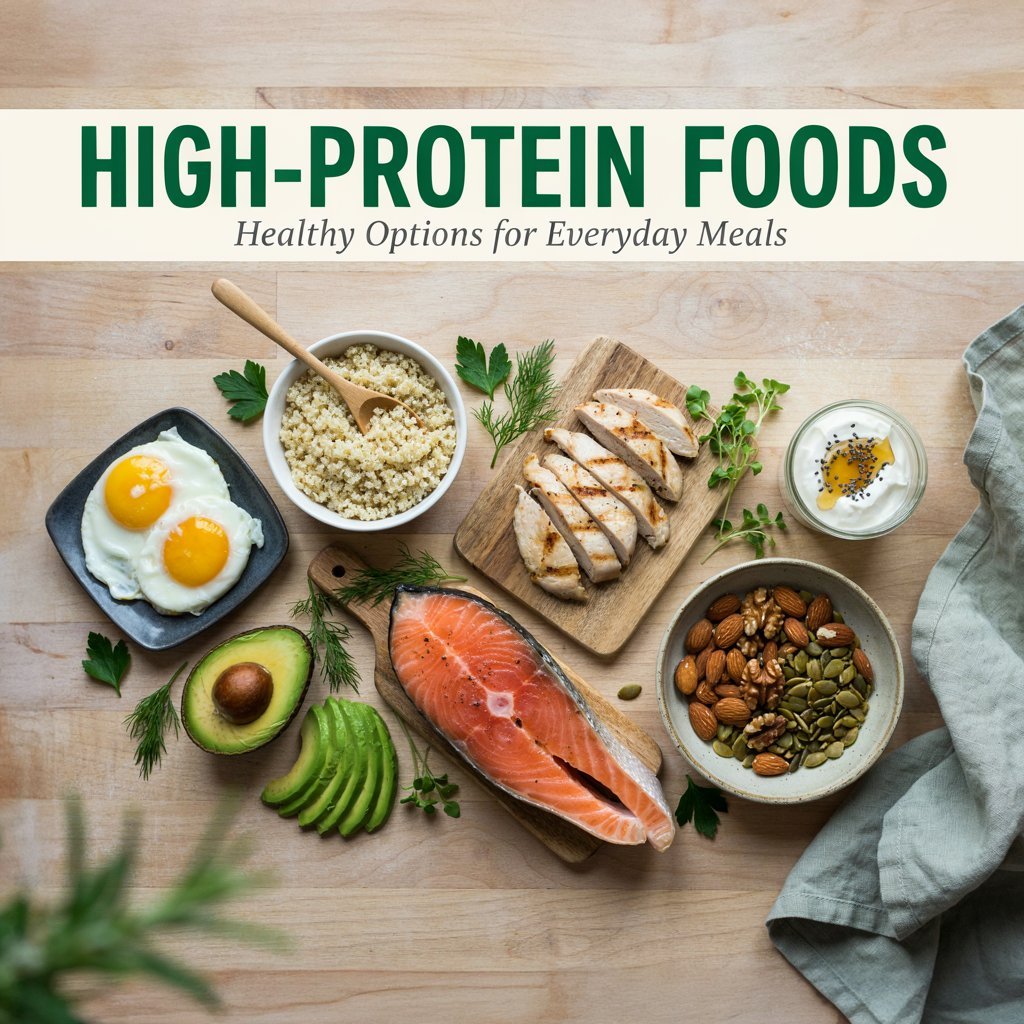
Protein is an important nutrient that your body needs every day. It helps maintain muscles and is also involved in many other normal functions throughout the body. Protein can be found in both animal and plant-based foods, making it possible to meet your dietary needs with many different food choices.
You do not necessarily need expensive or specialized foods to include more protein in your diet. Common foods such as eggs, lentils, beans, yogurt, fish, chicken, nuts, and seeds can all be incorporated into everyday meals.
The amount of protein a person needs can vary depending on factors such as age, body size, activity level, and overall health. Instead of focusing on a single “best” protein food, it is often more useful to include a variety of nutritious protein sources.
In this article, we explore healthy high-protein foods that can easily become part of your everyday meals.
Why Is Protein Important?
Protein is one of the three main macronutrients, along with carbohydrates and fats.
Your body uses protein to help build and maintain tissues, including muscles. Protein is also involved in the production of enzymes, hormones, and other substances that support normal body functions.
Including protein as part of balanced meals can also make meals more satisfying.
However, protein is only one part of good nutrition. A healthy diet should also provide carbohydrates, healthy fats, vitamins, minerals, fiber, and enough fluids.
1. Eggs
Eggs are one of the easiest protein-rich foods to include in your daily meals.
They are versatile, affordable in many places, and can be prepared in several ways, including:
- Boiled eggs
- Scrambled eggs
- Poached eggs
- Vegetable omelets
For a balanced breakfast, combine eggs with vegetables and whole-grain toast or another nutritious carbohydrate source.
2. Chicken
Chicken is a popular source of protein and can be used in many different dishes.
You can add cooked chicken to:
- Salads
- Sandwiches
- Wraps
- Rice dishes
- Soups
- Vegetable meals
Grilling, baking, steaming, or cooking chicken with moderate amounts of oil can be a practical way to prepare it.
When possible, choose less processed chicken products rather than relying heavily on highly processed versions.
3. Fish
Fish provides protein and can add variety to your diet.
Some fish, including salmon, sardines, and mackerel, also provide omega-3 fatty acids.
Fish can be served with vegetables and whole grains to create a balanced meal.
Try different varieties of fish rather than eating only one type. Preparation methods such as baking, grilling, or steaming can help keep meals simple.
4. Lentils
Lentils are a nutritious plant-based food that provides protein and dietary fiber.
They can be particularly useful for people who want to include more plant-based foods in their diet.
Lentils can be used in:
- Soups
- Curries
- Salads
- Rice dishes
- Homemade patties
They are also relatively easy to store and prepare, making them a practical pantry staple.
5. Chickpeas
Chickpeas are another versatile legume that provides protein and fiber.
You can add them to salads, soups, curries, or grain bowls.
They can also be blended to make foods such as hummus.
For a simple meal, combine chickpeas with vegetables and whole grains.
6. Beans
Kidney beans, black beans, white beans, and other varieties can contribute protein and fiber to your diet.
Beans can be added to:
- Soups
- Salads
- Rice
- Vegetable dishes
- Wraps
Using different varieties can also make meals more interesting and provide greater dietary variety.
7. Yogurt
Yogurt can provide protein and calcium, making it a useful addition to breakfast, lunch, or snacks.
Plain yogurt can be combined with:
- Fresh fruit
- Oats
- Nuts
- Seeds
When selecting yogurt, look at the nutrition label and consider choosing varieties with less added sugar.
Greek yogurt is often higher in protein than regular yogurt, although the exact nutritional content varies between products.
8. Cottage Cheese
Cottage cheese is another dairy food that can provide protein.
It can be eaten on its own or combined with other nutritious foods.
Try pairing cottage cheese with:
- Fresh fruit
- Whole-grain toast
- Tomatoes
- Cucumber
- Nuts or seeds
This makes it easy to incorporate protein into breakfast or a snack.
9. Nuts and Seeds
Almonds, peanuts, walnuts, pumpkin seeds, sunflower seeds, and chia seeds can contribute protein along with healthy fats and other nutrients.
They can be added to:
- Oatmeal
- Yogurt
- Smoothies
- Salads
- Homemade snacks
Nuts and seeds are relatively high in calories, so a moderate serving can be appropriate.
Choose unsalted or lightly salted options when possible.
10. Milk
Milk provides protein along with nutrients such as calcium.
You can drink milk on its own or use it in:
- Oatmeal
- Smoothies
- Homemade drinks
- Whole-grain breakfast recipes
For people who cannot consume dairy, there are various plant-based alternatives available. Nutritional content differs between products, so checking the label can help you choose an option that fits your needs.
Plant-Based Protein Options
You do not have to rely only on meat and dairy products to get protein.
Plant-based options include:
- Lentils
- Chickpeas
- Beans
- Peas
- Nuts
- Seeds
- Soy foods
Combining different plant foods throughout the day can help add variety to your protein sources.
For example, you could have lentil soup for lunch and chickpeas with vegetables for dinner.
How to Add More Protein to Your Meals
Adding protein does not require completely changing your diet.
Here are some simple ideas:
At Breakfast
Add eggs, yogurt, milk, nuts, or seeds to your breakfast.
At Lunch
Include chicken, fish, lentils, chickpeas, or beans with your regular meal.
As a Snack
Try plain yogurt, boiled eggs, nuts, seeds, or cottage cheese.
At Dinner
Include a protein source alongside vegetables and an appropriate portion of whole grains or other nutritious carbohydrates.
Protein and a Balanced Diet
More protein is not automatically better.
Your body needs a balance of different nutrients. A nutritious meal can contain:
Protein + vegetables or fruit + whole grains or other carbohydrates + healthy fats
For example:
Grilled chicken + brown rice + mixed vegetables + avocado
or
Lentils + whole-grain roti + vegetables + plain yogurt
These combinations provide a wider range of nutrients than focusing on protein alone.
Frequently Asked Questions
What are the best high-protein foods?
There is no single best protein food for everyone. Eggs, fish, chicken, yogurt, lentils, beans, chickpeas, nuts, and seeds are all nutritious options that can fit into a balanced diet.
Can I get enough protein from plant foods?
Yes. Foods such as lentils, beans, chickpeas, peas, nuts, seeds, and soy products can provide protein. Eating a varied diet can help you obtain different nutrients.
Are eggs a good source of protein?
Yes. Eggs provide high-quality protein and several other nutrients, making them a convenient addition to many meals.
Is yogurt high in protein?
Yogurt can be a good source of protein, although the amount varies by type and brand. Greek yogurt is often higher in protein than regular yogurt.
Should I eat protein with every meal?
Including a protein source in meals can be a useful way to build balanced meals, but individual nutritional needs vary. The amount and distribution of protein that is appropriate can depend on your overall diet and personal circumstances.
Are nuts a good source of protein?
Yes. Nuts provide protein along with unsaturated fats, fiber, and other nutrients. Because they are calorie-dense, moderate portions are generally appropriate.
Conclusion
Protein is an important part of a healthy diet, but you do not need complicated products or expensive supplements to include it in your meals.
Eggs, chicken, fish, lentils, chickpeas, beans, yogurt, cottage cheese, nuts, seeds, and milk are all practical protein-rich foods that can be used in a variety of everyday meals.
The best approach is to choose a variety of protein sources and combine them with vegetables, fruits, whole grains, and healthy fats. This creates a more balanced eating pattern and provides your body with a wider range of nutrients.
Start with small changes, such as adding eggs to breakfast, including lentils or beans at lunch, or choosing yogurt and nuts for a nutritious snack.
Disclaimer: This article is intended for general informational purposes only and does not provide individualized medical or nutritional advice. People with kidney disease, other medical conditions, food allergies, or specific dietary requirements should consult a qualified healthcare professional or registered dietitian before making significant changes to their protein intake.