
Introduction
Eating a healthy diet does not have to mean following a complicated meal plan or avoiding all your favorite foods. In many cases, making a few simple changes to your everyday meals can help you get more essential nutrients and support your overall health.
Foods such as fruits, vegetables, whole grains, nuts, seeds, eggs, and yogurt can provide important nutrients including fiber, protein, vitamins, minerals, and healthy fats. The key is to include a variety of nutritious foods rather than relying on just one type of food.
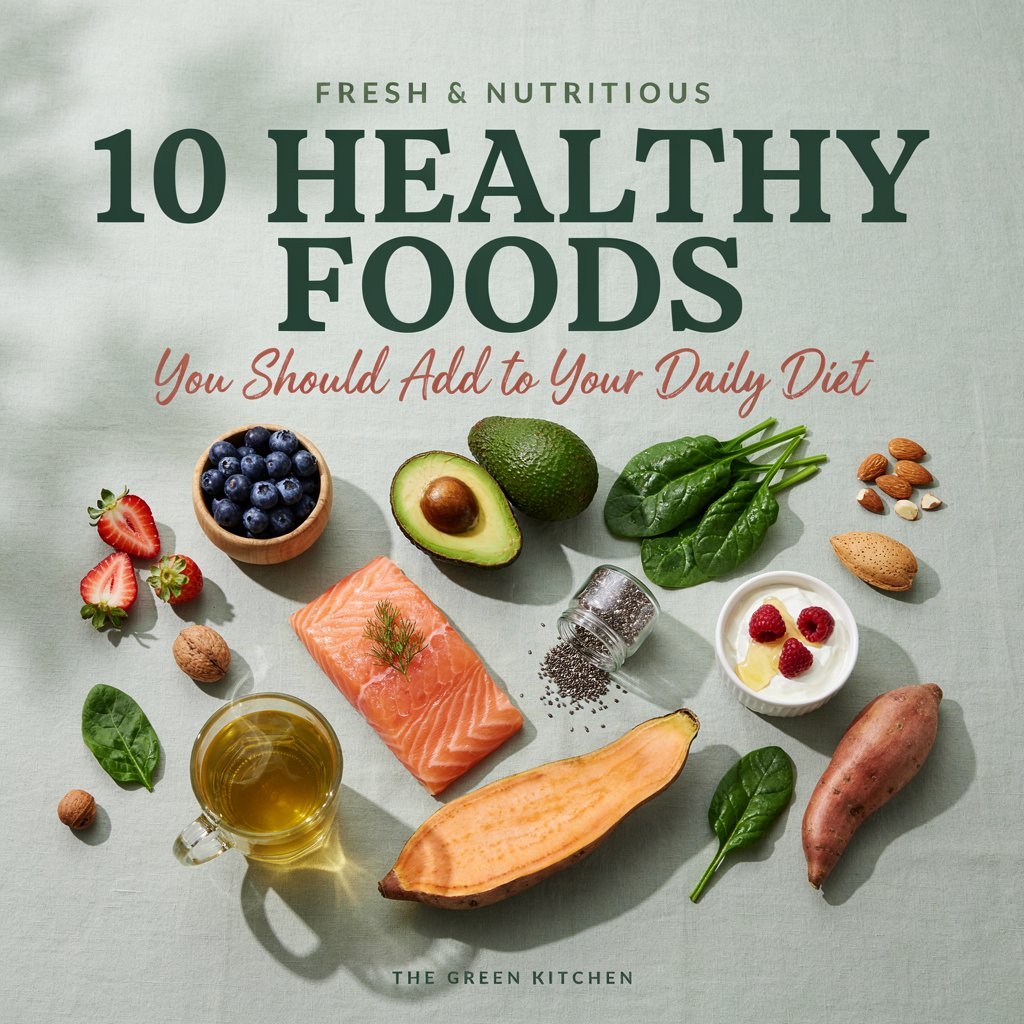
In this article, we will look at 10 healthy foods you can consider adding to your daily diet and explain what makes each one a useful part of a balanced eating pattern.
1. Leafy Green Vegetables
Leafy greens such as spinach, kale, lettuce, and other dark green vegetables are excellent additions to a healthy diet. They provide nutrients such as vitamin K, folate, vitamin C, and other beneficial plant compounds.
They are also generally low in calories and can add plenty of volume and variety to meals.
Simple ways to eat them:
- Add spinach to eggs or an omelet.
- Include leafy greens in salads.
- Add them to soups and vegetable dishes.
- Use fresh greens in sandwiches or wraps.
2. Eggs
Eggs are a convenient source of high-quality protein and contain several important nutrients. They can be particularly useful as part of breakfast or another meal when you want a satisfying source of protein.
You can prepare eggs in different ways, including boiled, poached, scrambled, or as part of a vegetable omelet.
For a balanced meal, combine eggs with vegetables and a source of whole grains.
3. Oats and Other Whole Grains
Whole grains such as oats, brown rice, whole-wheat bread, and barley contain more of the grain’s natural components than refined grains.
Oats are especially easy to incorporate into a daily routine. A bowl of oatmeal can be combined with fruit, nuts, seeds, or plain yogurt for a nutritious meal.
Whole grains can also contribute dietary fiber, which is important for digestive health.
4. Fresh Fruits
Fruits are an easy way to add natural sweetness, fiber, vitamins, minerals, and other plant nutrients to your diet.
Some nutritious choices include:
- Apples
- Bananas
- Oranges
- Berries
- Guava
- Papaya
- Mangoes
Instead of relying heavily on sugary desserts or processed snacks, consider having a piece of whole fruit when you want something sweet.
Eating different fruits throughout the week also helps add variety to your diet.
5. Yogurt
Plain yogurt can be a convenient source of protein and calcium. Some varieties also contain live cultures that can be part of a healthy eating pattern.
You can enjoy yogurt on its own or combine it with fruit, oats, nuts, or seeds.
When choosing yogurt, check the nutrition label and consider choosing options with less added sugar.
6. Nuts
Almonds, walnuts, pistachios, peanuts, and other nuts contain protein, healthy fats, fiber, vitamins, and minerals.
Because nuts are energy-dense, a small portion can be enough for a snack. Choosing unsalted or lightly salted varieties can also help you keep your sodium intake under control.
Try adding a small handful of nuts to breakfast, yogurt, oatmeal, or a snack.
7. Beans and Lentils
Beans, chickpeas, peas, and lentils are nutritious foods that can provide plant-based protein and dietary fiber.
They are also versatile and can be included in many different meals.
For example, lentils can be used in soups or curries, chickpeas can be added to salads, and beans can be included in rice or vegetable dishes.
For people who want to eat more plant-based foods, legumes can be an especially useful part of the diet.
8. Fatty Fish
Fish such as salmon, sardines, and mackerel provide protein and are sources of omega-3 fatty acids.
Including fish as part of a balanced diet can be a good way to obtain important nutrients while adding variety to your protein choices.
If you eat fish, choosing different varieties throughout the week can help create a more varied diet.
9. Seeds
Chia seeds, flaxseeds, pumpkin seeds, and sunflower seeds can provide fiber, healthy fats, protein, and various minerals.
You do not need a large amount to include them in your meals. They can easily be added to:
- Oatmeal
- Yogurt
- Smoothies
- Salads
- Homemade snacks
Ground flaxseed is another simple option for adding seeds to everyday meals.
10. Avocados
Avocados contain healthy unsaturated fats along with fiber and several vitamins and minerals.
Their creamy texture makes them easy to use in different meals. You can add sliced avocado to whole-grain toast, salads, sandwiches, or bowls.
Although avocado is nutritious, it is also relatively high in calories, so portion size still matters when planning your overall diet.
How to Build a Healthier Daily Diet
Adding healthy foods is only one part of good nutrition. It is also important to think about overall balance and variety.
A simple approach is to include:
- A variety of vegetables and fruits
- Protein-rich foods
- Whole grains
- Healthy sources of fat
- Enough water throughout the day
You should also try to limit your intake of foods that are high in added sugars, excessive sodium, and highly processed ingredients.
You do not have to change your entire diet overnight. Small, consistent changes can be easier to maintain over time.
Frequently Asked Questions
What is the healthiest food to eat every day?
There is no single food that provides everything your body needs. A healthy diet should include a variety of foods from different food groups.
Can I eat these foods every day?
Many of these foods can be included regularly, but your diet should still have variety. The appropriate amount depends on factors such as your age, activity level, dietary needs, and overall health.
Are nuts healthy for daily eating?
Yes, nuts can be part of a healthy diet because they provide protein, fiber, and unsaturated fats. However, they are calorie-dense, so a moderate portion is generally appropriate.
Are fruits good for a healthy diet?
Yes. Whole fruits provide fiber, vitamins, minerals, and other beneficial plant compounds. Eating a variety of fruits is a simple way to improve the nutritional quality of your diet.
Is eating healthy expensive?
Not necessarily. Foods such as lentils, beans, oats, seasonal fruits, vegetables, and eggs can be nutritious and relatively affordable. Planning meals and buying seasonal produce can also help manage food costs.
Conclusion
Adding nutritious foods to your daily meals does not need to be complicated. Leafy green vegetables, eggs, whole grains, fruits, yogurt, nuts, beans, fish, seeds, and avocados can all contribute valuable nutrients to a balanced diet.
The most important goal is not to eat one particular food every day, but to create an eating pattern that includes variety, balance, and moderation. Start with small changes that fit your lifestyle, such as adding fruit to breakfast, choosing whole grains, including more vegetables, or replacing highly processed snacks with nuts or yogurt.
If you have a medical condition, food allergy, or specific dietary requirement, consider speaking with a qualified healthcare professional or registered dietitian before making major changes to your diet.